
Digital Marketing Strategy
Table of Contents

- These days, marketing a business without a proper online strategy is nearly impossible. Conventional forms of marketing still hold importance, but they no longer are adequate to capture an audience that is constantly online. The current business atmosphere is incredibly competitive, thus the only way to prosper is to implement a thorough marketing strategy which balances an perfectly creative strategy along with data-analytics based decision making. In this paper, we will look at a marketing plan as a series of steps, market research being the first, and performance evaluation being the last
Defining the market and audience
The first step of any successful digital marketing strategy campaign is the thorough research of the market and audience. The best marketing strategy won’t work without proper demographic evaluation. Address the market on a much more simpler level based on the data collected from industry typing, and competition. Utilising Google Analytics, customer feedback forms, and on site social platforms will help gather data on age, gender, profession and psychographics.
Demographic research is useful, but the psychographic side is way more critical. The importance of values, motivations and obstacles of the customer is the essence of communication
Defining Clear Objectives

Once the audience has been identified, businesses must establish measurable and realistic goals. A comprehensive digital marketing strategy plan does not thrive on vague ambitions such as “increase brand awareness.” Instead, objectives should align with the SMART framework: specific, measurable, achievable, relevant, and time-bound. Examples include boosting website traffic by 20% over six months, generating 500 new leads through content marketing, or increasing email subscriber lists by 15% within a quarter.
Clear objectives serve two purposes., they allow for precise measurement of performance, enabling companies to adapt and refine strategies as needed.
Crafting a Strong Value Proposition and Messaging
At the core of every effective digital marketing plan is a compelling value proposition. Businesses must articulate what sets them apart from competitors and why customers should engage with their brand. Messaging should be consistent across all platforms, whether through social media posts, email campaigns, or website content. Consistency fosters trust, while strong storytelling ensures that the brand resonates emotionally with its audience.
Additionally, one of the unavoidable aspects of digital communication is personalization. Customers are expecting more and more content that is customized to their tastes and habits.
. Businesses may design unique experiences that encourage engagement and loyalty by using data analytics and customer segmentation.
Selecting Proper Digital Channels
There are plenty of digital marketing strategy types, however, not all types of marketing will work for every business. A business strategy will take into account the type of marketing the audience is accustomed to and the goals of the business. For instance, on LinkedIn, B2B companies looking to network and connect professionally will find the platform useful, whereas for brands wishing to connect with the younger audience, Instagram or TikTok would work more effectively.
Key channels are usually:
a) Combining off-page and on-page SEO to make a website more visible in search results
b) Developing and Promoting a Business Blog: Creating engaging audience focused videos, blogs, and infographics.
c) Social Media Branding: Establishing a brand on the business holder’s social Facebook and Instagram accounts, LinkedIn and Twitter.
d) Direct Mailing: Personalized emails are sent and subscribers receive them.
e) Pay For Click Marketing: Target ads are used to get traffic to website.
f) Using all types of marketing with a business will guarantee increased traffic and provide the business with different engagement models to choose from and also you can use google digital garage, hubspot blog etc
Budgeting and Resources Allocation
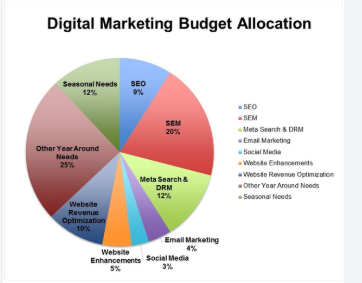
For example, in the case of organic SEO and social media marketing, content that is paid for would yield long term value, whereas in the case of paid ads, the value would be short term.
When you rely on tools for every part of your digital marketing strategy, the interactions become impersonal – the opposite of what we are trying to achieve in digital marketing, which is to forge relationships.
However, organizations must balance efficiency with authenticity.
Automation tools can help manage a majority of the processes involved with digital marketing.
All departments will need to work together to achieve an effective campaign to drive business objectives.
Successful implementation is about collaboration between departments: marketing teams, content creators, graphic designers, and data analysts.
This is when you create and publish content and launch campaigns while socializing, conversing, and engaging with your audience.
Particularly, small businesses at times would be better off balancing ambition with budget limitations by focusing on activities that would yield the greatest marginal benefit.
Like other elements of a digital marketing strategy, a digital marketing plan also needs to be aligned to the available budget. Organizations should also budget for content development, advertising expenditures, and the software tools as well as the qualified personnel that will assist them.
Implementation and Campaign Execution: Once you decide on your digital marketing strategy and allocate resources, it is time to execute.
Evaluation and Measurement of Success
No digital marketing strategy plan is complete without some sort of performance evaluation. Key Performance Indicators (KPIs), such as website visitors, conversion rates, customer acquisition costs, and other engagement metrics provide insight into whether the campaigns achieved their respective purpose and goals. Using analytics platforms provide information on where the marketing firms business has the strengths, as well as where are the weaknesses, and opportunities for improvement.
Another important thing is the willingness to change. Digital marketing strategy trends evolve quickly and the businesses that remain fixed in outdated strategies miss opportunities and are likely to fall behind. The comprehensive digital marketing plan will involve on-going evaluation and revision. A key component of a digital marketing strategy is demythologizing the facts to change course.
What about the challenges and considerations?
While the upside of digital marketing strategy, as outlined above, is significant – there are still challenges to be aware of. Challenges can come from things, like competition; growing fatigue in consumer advertising; and concern about data privacy. Marketers must navigate through these challenges. Further, marketers must support the ethical practice of marketing, compliance with all laws and regulations (like GDPR), and honour consent before sending communications. Lastly, marketers must always work towards a healthy balance between creativity and analytics
Conclusion

Creating a comprehensive digital marketing strategy plan is not merely a checklist of tactics but a dynamic, evolving process that blends research, creativity, and strategy. It begins with understanding the target audience and setting clear objectives, followed by selecting appropriate channels, allocating resources, and executing campaigns with consistency and authenticity. Most importantly, it requires continuous monitoring and adaptation to remain relevant in an ever-changing digital landscape. When executed effectively, a digital marketing plan becomes more than a promotional tool—it becomes the blueprint for sustainable growth and enduring customer relations